What to take away
- Animal experiments do not establish a useful or safe human regimen.
- Rat testicular, liver and kidney findings are reasons for caution.
- No purchase recommendation, stack or cycling protocol is supported here.
General education for adults. AI assisted content; not professionally medically reviewed. Sources are linked throughout. For advice about your health, speak with a qualified clinician. Our editorial policy.
There is not enough human evidence to recommend this supplement
Fadogia agrestis is promoted for testosterone, sexual performance and muscle building, but those claims outrun the available human evidence. Animal experiments do not establish that a commercial capsule works in people, and safety signals in animal research deserve attention rather than being edited out of a sales pitch. This guide does not recommend purchasing Fadogia or provide a dose, stack or cycling schedule.
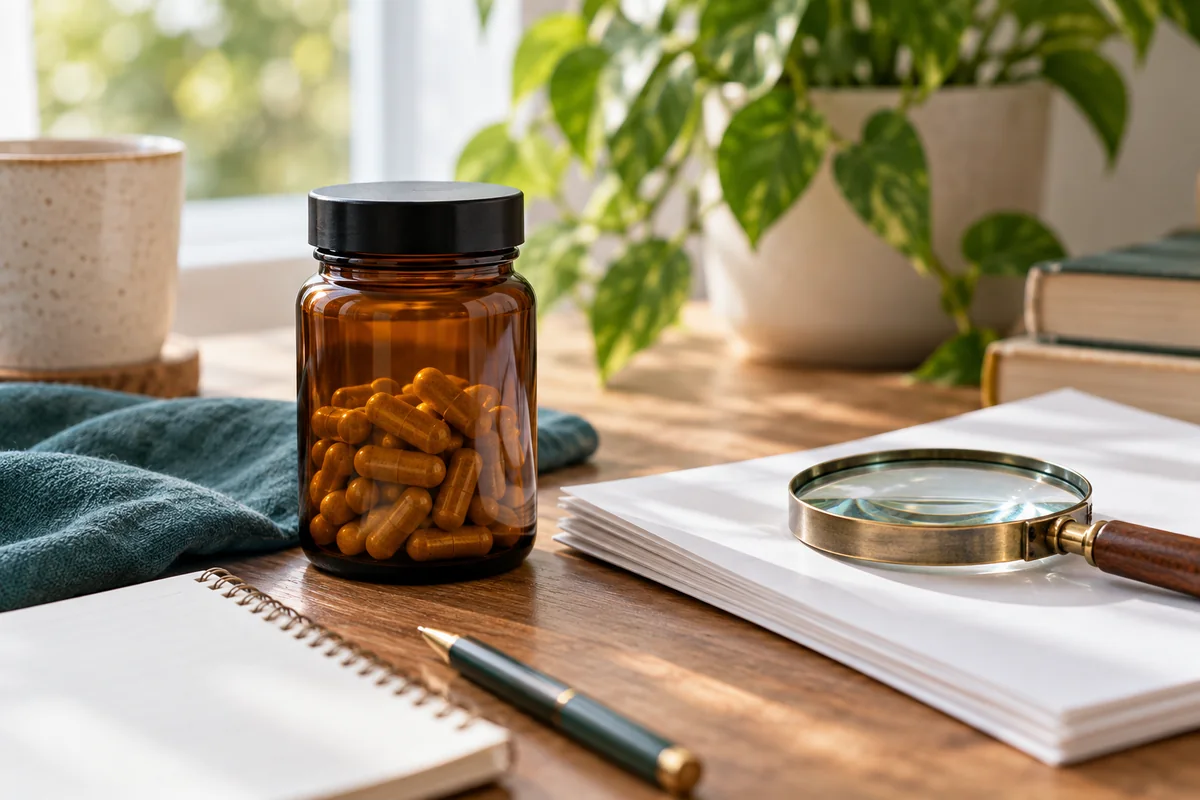
The supplied listing identifies a Double Wood product marketed as 600 mg per two-capsule serving, with 180 capsules. These are listing details, not a clinically validated human protocol. A single-ingredient description is easier to identify than a complex blend, but it does not by itself make the ingredient safe or useful. Claimed third-party testing remains a separate verification question and would not create the missing human evidence even if a relevant laboratory report were supplied.
Identify the leap between traditional use and a proven treatment
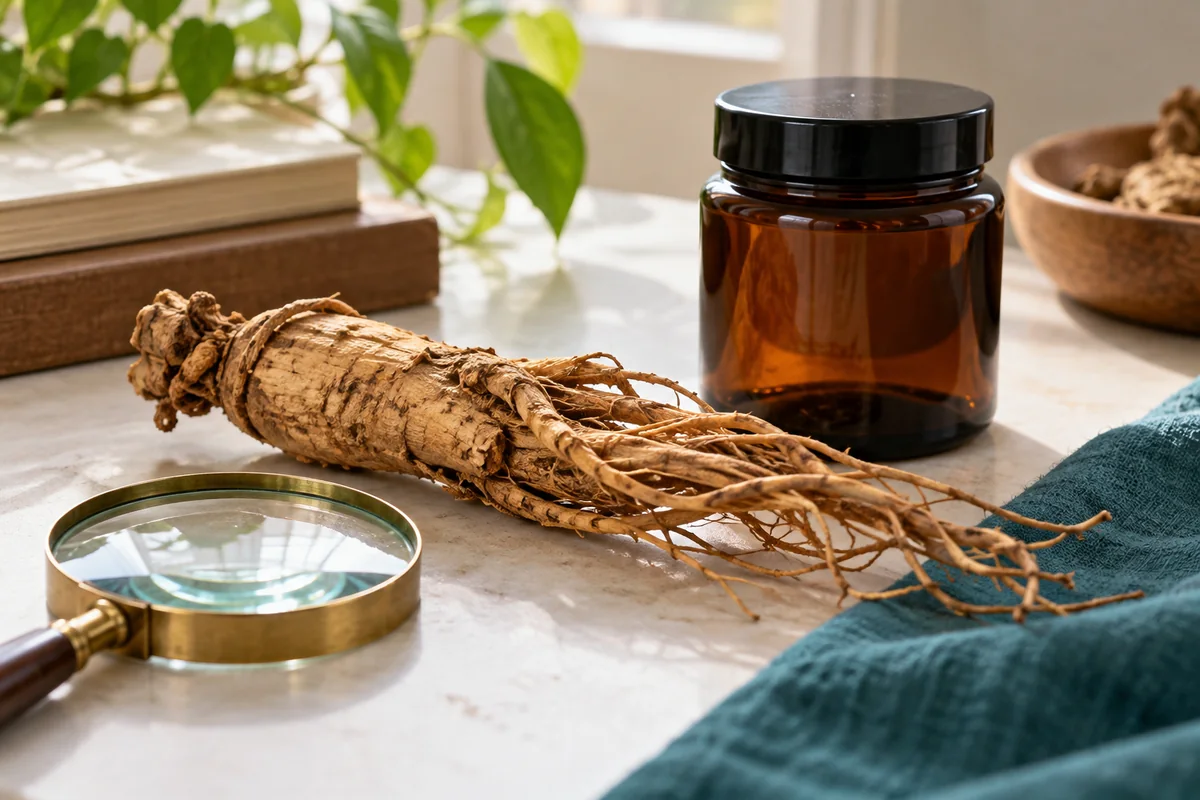
Fadogia agrestis is a plant investigated in preparations including stem extracts. Traditional use can motivate scientific questions, but a history of use is not the same as systematically recorded safety in a defined human population. Commercial products may also differ from traditional preparations or experimental extracts. Plant part, solvent, extraction process and chemical content all affect whether two preparations can reasonably be compared.
A reader should ask what the product is expected to accomplish and how that outcome was measured in people. “Supports testosterone” can sound more restrained than a treatment claim while still creating the impression of an established benefit. If the supporting reference measured something in rodents, keep that fact visible. Do not silently replace “male rats” with “men.” The translation is an unanswered research question, not a stylistic detail that can be removed for a shorter headline.
The frequently cited benefit experiment was in rats
A 2005 paper explored the aphrodisiac potential of an aqueous Fadogia agrestis stem extract in male albino rats. Its outcomes and design belong to that animal experiment; it was not evidence that an Amazon capsule improves sexual function, testosterone-related symptoms or training results in humans. Yakubu and colleagues: animal experiment, 2005.
Animal work can contribute to early biological understanding. It cannot tell a particular reader that a benefit will be meaningful, how often an adverse effect occurs in people or what amount is appropriate. Sexual behavior in a controlled rodent experiment also does not reproduce the physical, psychological and relationship factors involved in human sexual well being. A seller who cites this paper as general background should not present its existence as if the finished supplement has passed a human clinical trial.
Testicular findings raise a different and important question
A subsequent rat study examined testicular function indices after administration of an aqueous stem extract. The authors reported changes indicating adverse effects on male rat testicular function. This is a safety signal from an animal model, not a quantified prediction of harm for every human exposure. It nevertheless undercuts confident claims that the ingredient is a well-established reproductive-health aid. Yakubu and colleagues: testicular function study, 2008.
The honest conclusion has two parts: the animal result does not establish the exact human risk, and it does not establish human safety either. It is misleading to dismiss the experiment solely because it used animals while relying on another animal experiment to advertise benefits. Apply the same standard in both directions. If translation is uncertain for toxicity, translation is uncertain for the claimed benefit as well. The uncertainty should reduce confidence in self-experimentation, not become a reason to ignore inconvenient findings.
Liver and kidney experiments add to the uncertainty
Another primary paper investigated cellular toxicity-related findings in male rat liver and kidney after an aqueous Fadogia stem preparation. The study concerned experimental animal exposure and biochemical outcomes; it did not establish a safe dose for people. Yakubu and colleagues: liver and kidney study, 2009. Taken with the limited benefit evidence, it supports a cautious non-recommendation rather than a reassuring usage schedule.
Numbers from animal studies are sometimes converted into human servings by online calculators. That arithmetic does not establish a no-risk exposure, account for extract differences or replace human pharmacology and safety research. Nor does adding a liver-support supplement solve an unknown toxicity problem. Stacking products can add uncertainty and make it harder to identify the cause of symptoms. The more defensible action is to avoid an optional exposure whose expected human benefit is unproven.
Why reviews, blood tests and cycling do not resolve the gap
A favorable review reports one person’s experience under uncontrolled conditions. It may omit other supplements, training changes, expectations, medicines or adverse effects. A laboratory result before and after use is also difficult to interpret without appropriate testing conditions, a comparison and clinical context. Neither proves that the product caused a desirable change or that continuing it is safe.
Cycling is often offered as a practical-sounding answer to missing long-term data. Unless a schedule has been appropriately studied, it is another unverified claim. A break between exposures is not a demonstrated safeguard against every possible effect. This article therefore does not suggest starting low, gradually increasing, taking on alternate days or using an on/off cycle. Those instructions could give an appearance of medical certainty that the evidence does not support.
What to do if you already take it
Gather the exact label, lot number, serving amount, dates of use and every other medicine or supplement you take. Discuss the situation with a qualified clinician or pharmacist, especially if you have symptoms, reproductive concerns, liver or kidney disease, or relevant treatment. Do not change prescribed medication to accommodate an optional supplement. NCCIH emphasizes that supplement safety and interactions require context and that commercial products may differ from research preparations. NCCIH: Using Dietary Supplements Wisely.
If you suspect a reaction, stop the optional supplement and obtain appropriate medical guidance. Severe or rapidly worsening symptoms require urgent care; an online guide cannot determine their cause. Be direct about what you used rather than hiding it because you worry about criticism. The objective is a useful assessment. Keep the packaging if an adverse event needs to be reported or if product identification is uncertain. A normal-feeling first week should not be treated as proof of long-term safety.
Respond to the goal without relying on Fadogia
If you want to improve lifting, use a repeatable program, a realistic progression and enough recovery. Our two-day strength routine explains an adaptable starting framework. If the issue is sexual function, persistent fatigue or suspected hormone problems, seek appropriate assessment. Those concerns deserve more than a capsule selected because it is popular in a supplement stack.
Before any purchase, write a short decision statement: “I want to improve this specific outcome, and I need evidence in people that the benefit is meaningful and the risks are characterized.” For Fadogia, that threshold has not been met in this review. Choosing not to take it preserves money and avoids an unnecessary experiment. That is a substantive conclusion, not a failure to find a sufficiently exciting brand. An evidence-based wellness approach must leave room for a clear no.
The supplied product: label details and open questions
Double Wood Fadogia agrestis, 180 capsules
Retailer identity and label descriptions were checked October 19, 2026. They are not clinical evidence, proof of an authentic delivered batch, or results from personal product testing. Packaging can change.
| Listing identity | Amazon ASIN B09GSWML11 |
|---|---|
| Serving or specification | The listing states 300 mg per capsule and 600 mg per two-capsule serving. A labeled amount is not a proven safe human dose. |
| Composition or material | The listed active ingredient is Fadogia extract; retailer text also identifies rice flour and a vegetarian capsule. “Single ingredient” does not mean no capsule or filler. |
| Testing and certification | Independent certification and current batch-specific laboratory results for this exact supplied item were not confirmed. Manufacturer or retailer testing claims are not treated as independent verification. |
No affiliate purchase link is included: adequate human efficacy and safety evidence is missing, with concerning findings in animal research.
Questions readers commonly ask
Is the listed 600 mg serving a proven human dose?
No. It is a product-label amount, not evidence of an effective or safe clinical regimen. This guide does not convert it into a recommendation.
Would third-party testing make Fadogia effective?
Testing can address specified quality questions, such as identity or selected contaminants. It cannot supply missing clinical evidence or validate broad testosterone and muscle-building claims.
Are animal safety concerns proof that everyone will be harmed?
No. The human risk is uncertain. The point is that the combination of uncertain benefit and unresolved safety does not justify a confident consumer recommendation.
Want to understand your meals in numbers? Explore the macro calculator and meal planner. Tracking is optional and may not suit everyone.
Sources & references
- Yakubu MT, Akanji MA, Oladiji AT: Aphrodisiac potentials of the aqueous extract of Fadogia agrestis (Schweinf. Ex Hiern) stem in male albino rats. 2005. Source link checked October 19, 2026.
- Yakubu MT, Akanji MA, Oladiji AT: Effects of oral administration of aqueous extract of Fadogia agrestis (Schweinf. Ex Hiern) stem on some testicular function indices of male rats. 2008. Source link checked October 19, 2026.
- Yakubu MT, Oladiji AT, Akanji MA: Mode of cellular toxicity of aqueous extract of Fadogia agrestis (Schweinf. Ex Hiern) stem in male rat liver and kidney. 2009. Source link checked October 19, 2026.
- NCCIH: Using Dietary Supplements Wisely. Source link checked October 19, 2026.
Research can change. These sources support the claims cited in this article, rather than every suggested example. Our action plans are adaptable editorial examples.

Maya Rivera
A fictional editorial persona for My Wealthy Body’s nutrition coverage, translating sourced guidance into approachable meals and everyday food choices.
Fictional editorial persona · AI generated portrait · No clinical credentials