What to take away
- Build around familiar foods and add a missing component.
- Use affordable convenience ingredients and a backup meal.
- Personalize portions and medical restrictions with appropriate care.
General education for adults. AI assisted content; not professionally medically reviewed. Sources are linked throughout. For advice about your health, speak with a qualified clinician. Our editorial policy.
Start with a flexible meal template
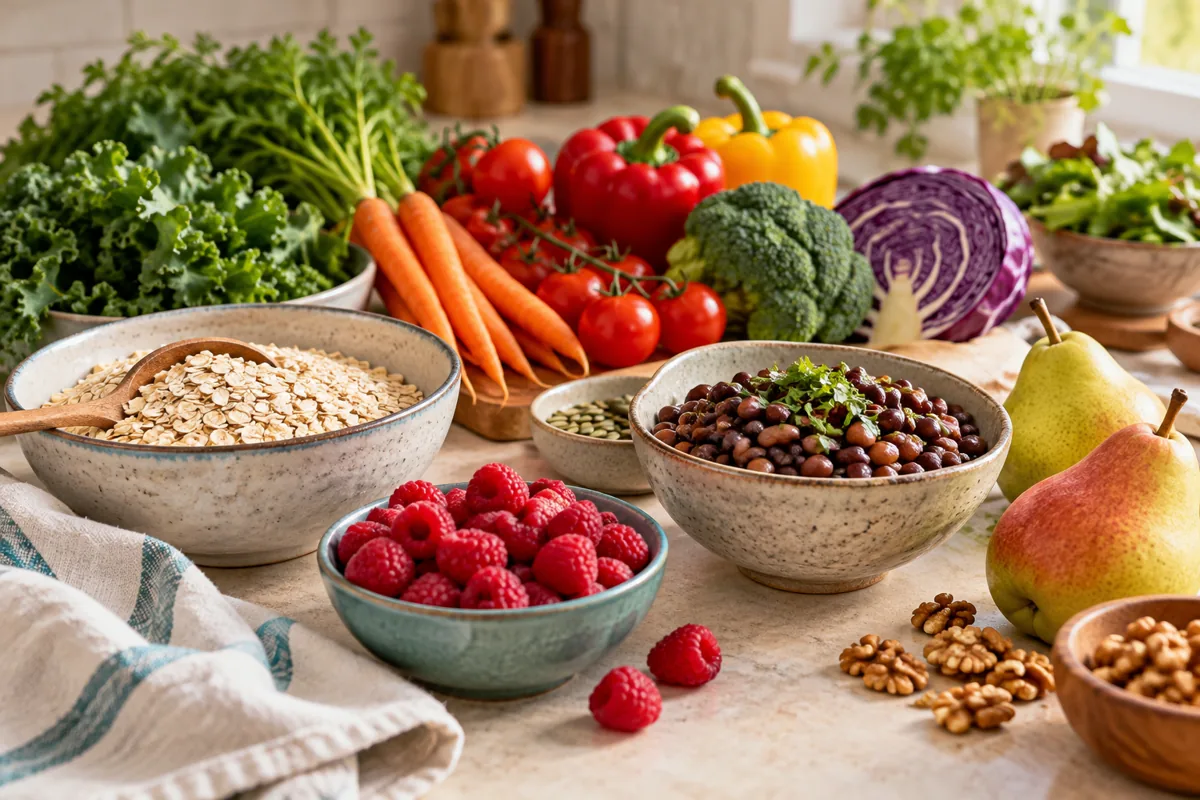
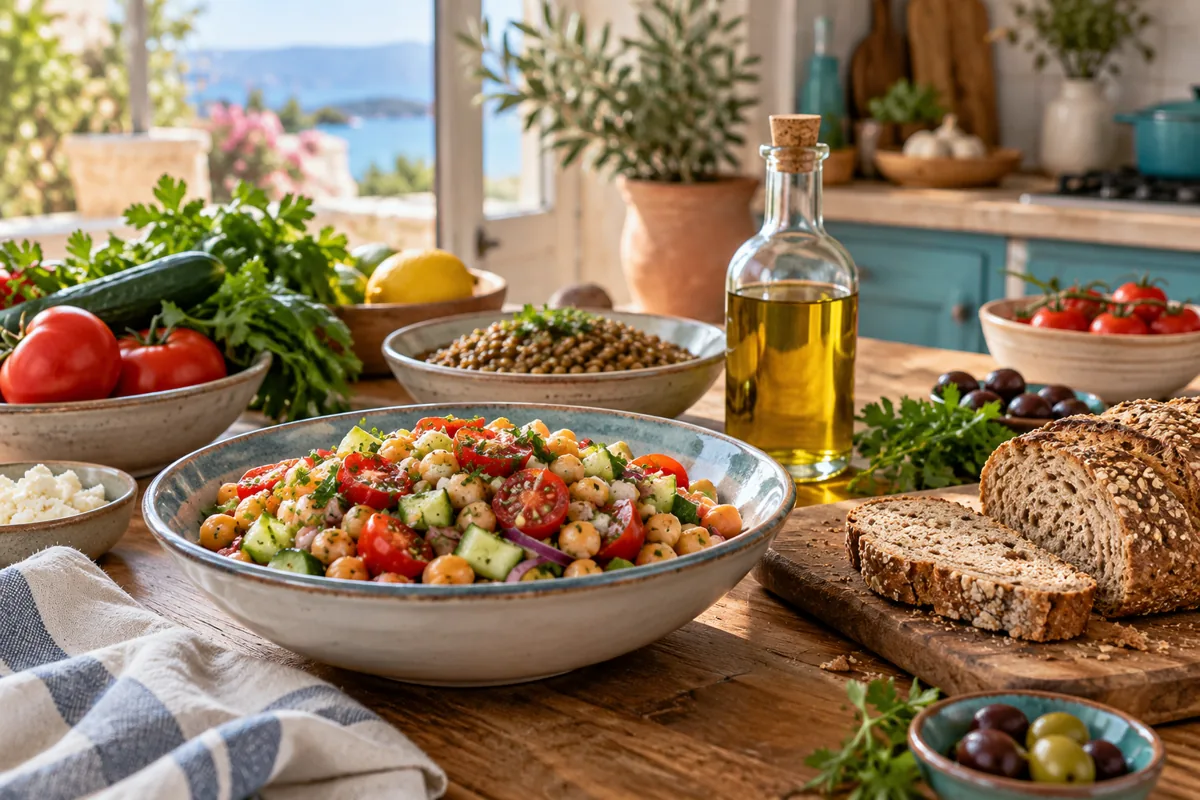
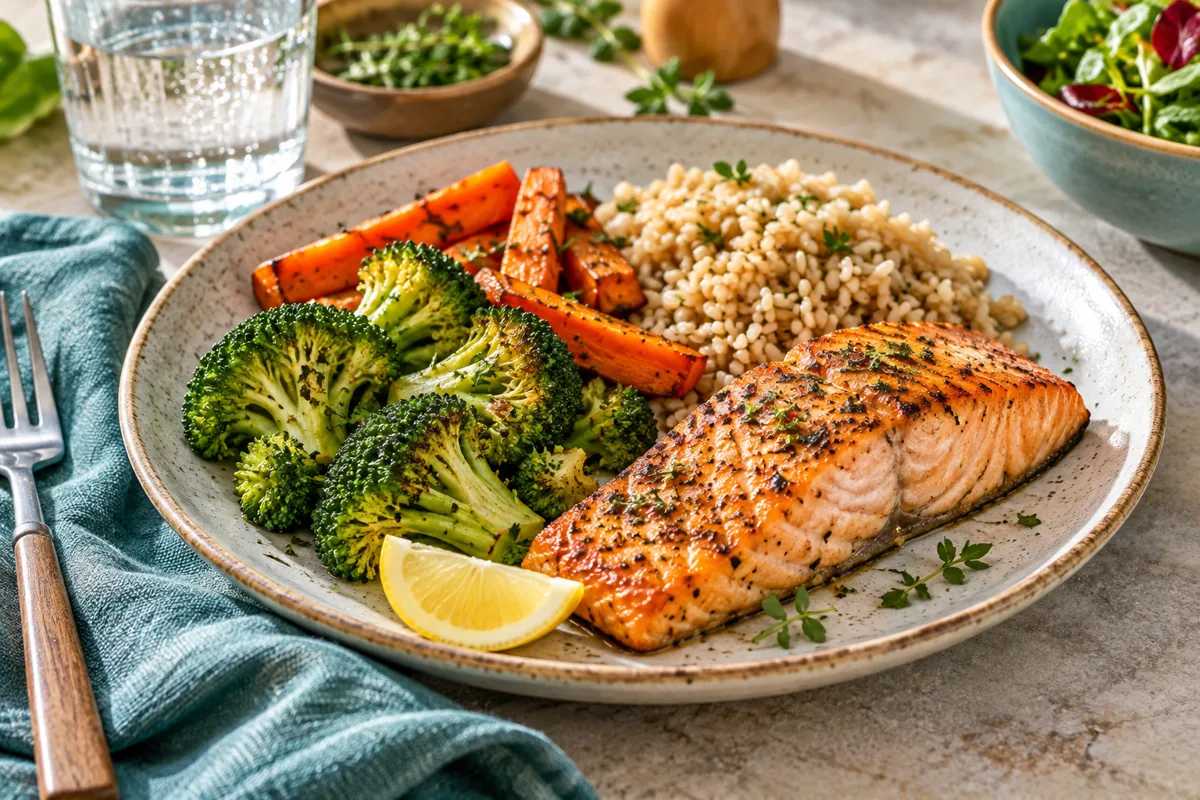
A balanced meal can begin with a few recognizable components: vegetables or fruit, a protein source, a grain or other starchy food, and some fat for flavor. This is a practical planning tool, not a rule that every plate must follow. WHO emphasizes dietary variety, including produce, pulses, whole grains, and lean protein sources. [1]
Think about your usual lunch before replacing it. A rice bowl could include beans, chicken or tofu, cooked vegetables, and a flavorful sauce. A sandwich could include a protein filling and a side of fruit. Start by adding a missing component rather than treating a familiar meal as a problem. Your budget, appetite, culture, and cooking equipment matter.
Choose components you actually enjoy
Make a short list of foods you reliably eat. Under protein, you might write eggs, lentils, yogurt, fish, or tofu. Under produce, list carrots, cabbage, bananas, and frozen spinach. Under starches, include oats, potatoes, bread, and rice. This creates a personal menu rather than a shopping list borrowed from someone else.
For breakfast, try oats with milk or a fortified alternative, berries, and a spoon of seeds if suitable for you. For dinner, pair roasted potatoes with beans and sautéed cabbage. These are examples, not prescriptions with guaranteed health outcomes. You can change amounts, textures, seasonings, and ingredients to match your needs. There is no requirement to make every meal visually perfect.
Use portions as a starting point, not a verdict
A plate model can make planning easier, but visual proportions do not determine exactly how much energy or nutrition a person needs. A physically active person, someone recovering from illness, and someone with a low appetite may need different amounts. Soups, stews, and mixed dishes can also be balanced even when their components are not separated.
Begin with enough food to make the meal satisfying, then adjust based on your usual needs and any individual advice you have received. Calorie tracking is optional, and it can be unsuitable for people with an eating disorder history. If tracking increases anxiety, a regular meal pattern and professional support may be more appropriate than detailed numerical targets.
Make convenience work for you
Convenient ingredients can support a routine: frozen vegetables, canned beans, bagged salad, microwavable grains, and plain yogurt all offer options. Compare products rather than assuming every packaged food is equivalent. DASH is an established eating plan built from ordinary foods; it does not require specialty products. [3]
Choose two meals that share ingredients. For example, use cabbage in a rice bowl one day and a bean soup the next. Keep a backup meal you can assemble in minutes: toast with eggs and fruit, or canned beans with rice and frozen vegetables. Buying ingredients for a complicated plan that you cannot cook is usually less useful than repeating a simple meal you like.
Adapt the approach to real life
If you eat with family, change the shared meal through additions and substitutions instead of preparing a completely separate menu. Add a vegetable side, offer beans alongside meat, or serve fruit when it fits the meal. If your food access is limited, shelf stable basics may be more realistic than frequent purchases of fresh produce.
When eating out, identify what the meal already contains and what would make it more complete for you. A side of vegetables, fruit, beans, or yogurt may be enough. You do not need to compensate for an enjoyable meal by skipping the next one. A balanced eating pattern is built across time and should leave room for pleasure, traditions, and social connection.
Your first-week plan and when to personalize
For the next week, choose one meal to improve. Write its usual components, choose one affordable addition, and buy only enough to test the change. After several attempts, ask whether the meal was practical, enjoyable, and satisfying. If it was not, change the ingredients or timing before expanding the plan. NIDDK offers broader guidance for making eating and activity goals fit everyday life. [2]
This general template is not an individualized diet. Kidney disease, food allergies, diabetes treatment, pregnancy, swallowing difficulties, and other circumstances may require specific adjustments. A registered dietitian or treating clinician can help adapt meals safely. Seek support for unintended weight changes, persistent digestive symptoms, or a growing fear of food rather than imposing additional restrictions.
Common practical questions
Do I need a new recipe for every meal?
No. Repeating a meal you enjoy can make shopping and preparation easier. Change one component when you want variety: use a different vegetable, seasoning, protein source, or grain. A small set of reliable meals can be a useful foundation, especially when work or caregiving leaves little time.
What if my meals are mixed dishes?
You can use the same planning approach with soups, stews, sandwiches, and casseroles. Identify the ingredients already included and consider whether an addition would suit the meal. There is no need to separate every component onto a plate. If you are following specific medical nutrition advice, use that guidance rather than a generic visual template.
Want to understand your meals in numbers? Explore the macro calculator and meal planner. Tracking is optional and may not suit everyone.
Sources & references
- World Health Organization: Healthy diet. January 26, 2026. Source link checked October 11, 2026.
- NIDDK: Health Tips for Adults. Source link checked October 11, 2026.
- NHLBI: DASH Eating Plan. Updated February 25, 2026. Source link checked October 11, 2026.
Research can change. These sources support the claims cited in this article, rather than every suggested example. Our action plans are adaptable editorial examples.

Maya Rivera
A fictional editorial persona for My Wealthy Body’s nutrition coverage, translating sourced guidance into approachable meals and everyday food choices.
Fictional editorial persona · AI generated portrait · No clinical credentials