What to take away
- Choose several ordinary plant foods rather than one “superfood.”
- Increase fiber gradually and consider your fluid guidance.
- Persistent digestive symptoms need assessment, not endless food restrictions.
General education for adults. AI assisted content; not professionally medically reviewed. Sources are linked throughout. For advice about your health, speak with a qualified clinician. Our editorial policy.
What fiber means in everyday eating
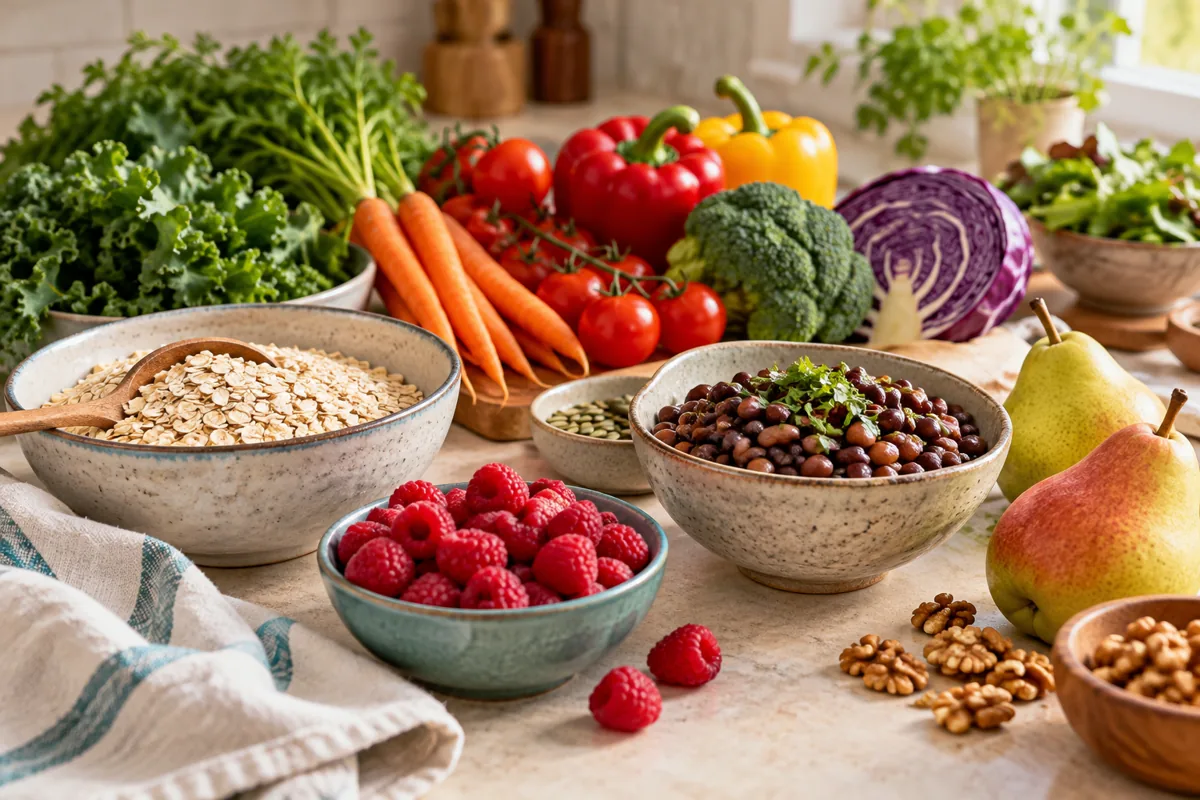
Fiber is found in plant foods, and food sources include beans, lentils, whole grains, vegetables, fruit, nuts, and seeds. Different foods contain different fiber types; you do not need to classify every bite to start eating a wider variety. NIDDK recommends increasing fiber gradually and getting appropriate fluids when addressing constipation. [1]
If your meals rarely include these foods, begin with one regular opportunity: oats at breakfast, beans with lunch, or vegetables at dinner. Fiber is one part of nutrition, not a substitute for sufficient food or medical evaluation. A high fiber label does not tell you everything about a product, and more is not automatically better for every person.
Use foods before chasing a perfect number
NIDDK lists an adult range of 22 to 34 grams daily depending on age and sex. Individual needs and tolerance can differ, particularly with digestive conditions. [1] Instead of jumping to a target overnight, first note which plant foods you already eat.
A practical starting list might include oats, lentils, canned beans, apples, carrots, and whole grain bread. Look at the Nutrition Facts panel when comparing similar packaged foods; fiber amounts vary. Portions also matter, so compare the stated serving sizes. Avoid turning the number into a competition. If you are already eating varied plant foods comfortably, there may be no need to overhaul your diet or buy a fiber supplement.
Increase slowly and observe tolerance
Make one modest change at a time. Try adding a small amount of beans to a meal, then keep that change steady for several days. Alternatively, replace one usual grain with a whole grain version you enjoy. This example is a planning suggestion, not a research tested schedule.
Write down the food change and any relevant digestive discomfort. That is more informative than changing breakfast, lunch, dinner, and supplements simultaneously. If a particular food is uncomfortable, try a different source or smaller portion rather than labeling an entire food group harmful. Persistent symptoms deserve professional advice. A food diary should help a conversation with a clinician, not become a reason to avoid an increasingly long list of foods.
Build affordable combinations
Fiber sources do not need to be exotic. Consider lentil soup with carrots, oats with fruit, beans with rice, or a baked potato with vegetables. Choose versions and textures that work for your household. Frozen produce and canned ingredients can make these meals easier to repeat.
For a grocery experiment, buy one staple and plan two uses. A can of beans could go into a grain bowl and a soup. A bag of oats could become breakfast and an ingredient in a familiar recipe. Check storage instructions and use leftovers safely. If you share meals, offer the new component alongside the usual food so everyone can choose an amount they tolerate.
Hydration and supplements require context
Fluids can help fiber work effectively, but the right amount depends on health, activity, and other circumstances. People with prescribed fluid restrictions should follow their care plan rather than a generic water goal. [1]
A supplement can be useful for some people, but its suitability, dose, and timing are not interchangeable with food advice. Ask a pharmacist or clinician about medicines, swallowing concerns, and your symptoms before adding one. Follow product directions and do not use it to ignore persistent constipation. WHO’s broader nutrition guidance favors a varied eating pattern; a single powder cannot reproduce that entire pattern. [2] Avoid products sold with promises to cleanse, detoxify, or permanently repair the gut.
Make a small plan and know the limits
Choose one fiber containing food you like and decide exactly when to eat it. For example: add a small serving of lentils to Tuesday dinner, then repeat if comfortable. Keep the rest of your routine fairly stable while you assess the change. You can gradually expand variety after the first step is manageable.
General advice may not suit people with bowel narrowing, active gastrointestinal disease, recent surgery, or a prescribed low fiber diet. Do not raise fiber aggressively without checking those restrictions. Seek medical care for blood in stool, severe or persistent abdominal pain, vomiting, unexplained weight loss, or new persistent bowel changes. Food choices can support a care plan, but they do not establish a diagnosis or replace treatment.
Common practical questions
Should I change every meal at once?
A single change is usually easier to observe and repeat. Choose an existing meal and add one food you tolerate, then review how practical and comfortable it was. This is a planning preference, not a guarantee about digestive outcomes. If you have been prescribed a restricted diet, check the proposed change first.
Can I use frozen or canned ingredients?
These can be practical ways to keep suitable foods available. Compare labels where useful, account for the amount you will actually eat, and follow storage instructions. Choose products that fit your preferences and medical guidance. The best grocery option is not always the one that looks most impressive online; preparation time, cost, and access are relevant too.
Want to understand your meals in numbers? Explore the macro calculator and meal planner. Tracking is optional and may not suit everyone.
Sources & references
- NIDDK: Eating, Diet, & Nutrition for Constipation. Reviewed May 2018. Source link checked October 11, 2026.
- World Health Organization: Healthy diet. January 26, 2026. Source link checked October 11, 2026.
Research can change. These sources support the claims cited in this article, rather than every suggested example. Our action plans are adaptable editorial examples.

Maya Rivera
A fictional editorial persona for My Wealthy Body’s nutrition coverage, translating sourced guidance into approachable meals and everyday food choices.
Fictional editorial persona · AI generated portrait · No clinical credentials