What to take away
- The supplied link is beef liver capsules, not a verified organic blend.
- Unquantified vitamin A, iron and B12 are not standardized deficiency treatment.
- Do not interpret hives, dizziness or nausea as beneficial detoxification.
General education for adults. AI assisted content; not professionally medically reviewed. Sources are linked throughout. For advice about your health, speak with a qualified clinician. Our editorial policy.
The supplied “organic blend” is actually a beef liver supplement
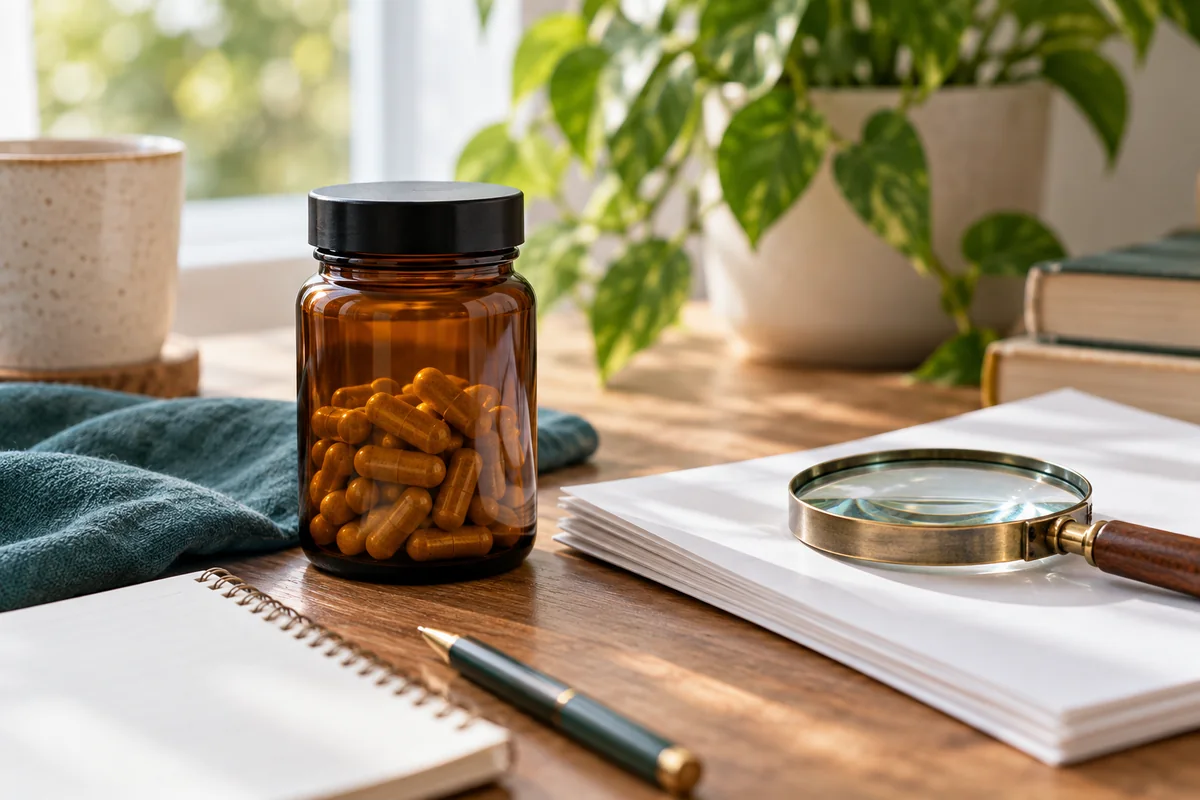
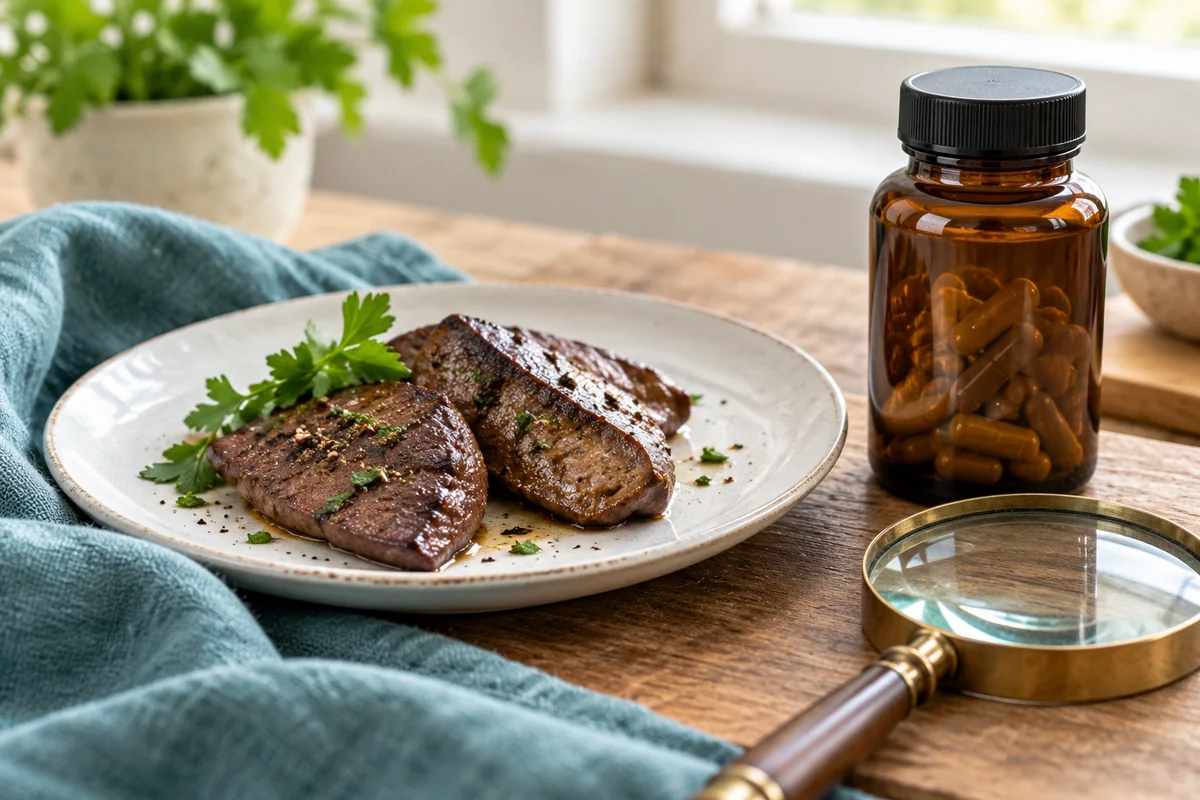
The link supplied as an Organic Blend Supplement resolves to Ancestral Supplements Beef Liver Support Capsules, a 180-count product marketed as freeze-dried, grass-fed beef liver. That is a different category from a general plant blend. Grass-fed and organic are not interchangeable descriptions, and we have not verified USDA Organic certification for this product. Marketplace nutrient and wellness claims also need to be separated from independently measured quantities and clinical evidence.
Beef liver is a food source of several nutrients, but a capsule containing dried liver is not automatically a standardized treatment for low iron, low vitamin B12 or fatigue. The important missing question is how much of each relevant nutrient the current serving actually supplies. Without adequately quantified micronutrients and a clear individual reason for use, we do not recommend purchasing this product as a deficiency remedy. This guide explains the decision rather than repeating a generalized “liver support” promise.
Nutrients in liver do not prove benefits from every capsule
NIH identifies liver among concentrated food sources of preformed vitamin A. Vitamin A has normal roles in vision, immunity and growth, but that biological importance does not mean that additional vitamin A is beneficial when intake is already sufficient. NIH ODS: Vitamin A and Carotenoids. An organ-food narrative can sound persuasive while leaving the actual amount per supplement serving unanswered.
Think of the comparison this way: a food-composition table describes a specified food and portion, while a supplement label describes a processed product and serving. They are related information, not identical measurements. Do not multiply a table entry for cooked liver by an assumed fresh-to-dried ratio and present the result as the bottle’s tested vitamin content. The drying process, source material and serving must be characterized. A credible review should make the gap visible rather than fill it with convenient estimates.
Iron support needs a diagnosis and a known amount
Iron is required for normal functions including oxygen transport. Iron deficiency has causes that require attention, and taking more iron is not appropriate for everyone. NIH discusses assessment, deficiency-related concerns and the risks of excess iron, including special concerns in hereditary hemochromatosis. NIH ODS: Iron. A product containing liver should not be presumed harmless simply because it is food-derived.
If you are concerned about anemia or persistent fatigue, ask what evaluation is appropriate. Treatment may need to address the cause as well as the measured deficiency. A capsule with an unquantified amount of iron cannot be assumed to deliver a clinically suitable amount. Conversely, someone with iron overload should not add an iron-containing product based on energy marketing. Keep the label, discuss the actual nutrient information and ask whether a targeted, quantified product is more appropriate when supplementation is indicated.
Vitamin B12 is another reason to avoid vague assumptions
Liver can supply vitamin B12, but a product’s association with a B12-rich food does not prove that a particular serving provides the amount or form needed for a clinical problem. NIH explains that B12 deficiency can arise from inadequate intake or absorption-related conditions and that appropriate management depends on the situation. NIH ODS: Vitamin B12. The distinction is important for readers who have symptoms or an established diagnosis.
Ask a clinician what the intended treatment should accomplish and how it will be reviewed. Do not rely on a liver capsule because its branding feels more natural than a measured nutrient. Natural origin does not remove the need to know the amount. If you avoid animal products, this is also a straightforward mismatch with your dietary preference: beef liver capsules are animal-derived. There is no need to abandon a meaningful preference to follow a broad wellness recommendation when more specific options can be evaluated.
Preformed vitamin A and pregnancy deserve explicit caution
For adults, NIH lists a tolerable upper intake level of 3,000 micrograms RAE per day for preformed vitamin A. Excess preformed vitamin A can be harmful, and high intake during pregnancy can cause birth defects. That limit is not a recommended supplement dose, and it should not be interpreted as an allowance to add unmeasured liver capsules on top of other sources. NIH: Vitamin A intake limits and risks.
Pregnancy, pregnancy planning, use of a prenatal or multivitamin, retinoid medicines and relevant medical conditions should prompt a qualified review before considering a liver supplement. Bring every product to the conversation, including cod liver oil or other sources of preformed vitamin A. Unknown quantities make overlap harder to evaluate, not safer. This article does not estimate a safe capsule count from the marketing description. Individual advice needs the actual amounts and clinical context.
Adverse reactions are not proof of detoxification
The manufacturer’s description reviewed for this product presents symptoms such as nausea, hives or dizziness in a “detoxification” explanation and suggests modifying the amount. We reject that interpretation as a reason to continue through a suspected adverse reaction. Those symptoms do not establish that pathways are being restored, toxins are leaving the body or a product is providing a benefit. They require an appropriate response to the symptom itself.
Stop an optional product if you suspect it is causing a reaction and seek appropriate medical or pharmacist guidance. Hives with trouble breathing, throat or tongue swelling, fainting or rapidly worsening symptoms can represent an emergency; obtain emergency help. Do not attempt to manage a severe reaction by taking fewer capsules. Save the package, ingredient list, lot number and timing of exposure so a professional can evaluate what happened. An affiliate relationship must never turn a warning sign into a sales-friendly wellness story.
Separate source claims, testing and finished-product evidence
Grass-fed, freeze-dried and non-GMO are descriptions or claims about sourcing and processing. They do not independently establish organic certification, a precise micronutrient dose or a clinical outcome. USDA’s organic labeling guidance describes the relevant certification categories; a grass-fed claim is not a substitute for verification under that system. USDA: Labeling Organic Products. We have not confirmed an organic certification for the supplied bottle.
For nutrient and quality questions, ask for the exact product’s current label and a relevant report identifying the tested lot, laboratory, method and results. Does the report quantify the micronutrients being advertised, or test only selected contaminants? Are the amounts expressed per serving in units you can compare with your other products? A generic statement that organs are nutrient-dense does not answer those questions. Neither does a testimonial from a person who felt more energetic after changing several parts of their routine.
When ordinary food or a targeted product may be simpler
If you enjoy liver as a food, portion choice and overall dietary intake still matter; this article is not a recommendation to eat large amounts regularly. If you do not enjoy it, capsules are not automatically necessary. You can discuss other food sources and, where indicated, a targeted nutrient product with a clear dose. The best alternative depends on the actual need, not on the assumption that every person should consume organs.
For general well being, start with a practical meal pattern. Use our balanced-meal guide to improve a meal you already eat, and seek assessment for symptoms instead of assigning them to a nutrient deficiency yourself. Compare the cost of liver capsules with the cost of meeting the same identified need through ordinary meals or professional treatment. A supplement that cannot clearly state its role should not displace more useful spending. No single capsule replaces adequate food, rest or appropriate medical care.
A useful decision checklist before any purchase
Write down the reason you are considering the product, the nutrient or outcome involved and what information would change your decision. Then ask for a quantified serving, independently checkable testing where claimed, relevant precautions and a realistic plan to assess whether the need remains. If those details cannot be obtained, keeping the purchase on hold is a reasonable result of the review.
This product’s organ-food identity is verified at the listing level, but its marketing should not be mistaken for proof of standardized deficiency treatment. In particular, the absence of clear micronutrient amounts and the problematic detox framing prevent a recommendation here. Choosing not to attach a purchase invitation is consistent with putting reader value first. A useful article can help you avoid an unnecessary product as readily as it can explain when a well-characterized supplement has a legitimate role.
The supplied product: label details and open questions
Ancestral Supplements Beef Liver, 180 capsules
Retailer identity and label descriptions were checked October 19, 2026. They are not clinical evidence, proof of an authentic delivered batch, or results from personal product testing. Packaging can change.
| Listing identity | Amazon ASIN B01MSBZYQW |
|---|---|
| Serving or specification | The listing describes liver and gelatin capsules. The manufacturer’s six-capsule serving is product labeling, not a validated treatment protocol. |
| Composition or material | Listed ingredients: bovine liver and gelatin capsule. Exact vitamin A, iron and other micronutrient amounts in the finished serving were not confirmed. |
| Testing and certification | Independent certification and current batch-specific laboratory results for this exact supplied item were not confirmed. Manufacturer or retailer testing claims are not treated as independent verification. |
No affiliate purchase link is included: finished-serving micronutrient amounts remain unclear, and we reject the retailer’s framing of hives or other adverse symptoms as detoxification.
Questions readers commonly ask
Is this an organic blend?
The supplied link identifies a beef liver capsule product. Grass-fed wording does not establish USDA Organic certification, which has not been verified here.
Can it replace prescribed iron or B12 treatment?
Do not make that substitution. Deficiencies can have different causes and require defined treatment; unquantified liver-derived nutrients are not an equivalent prescription.
Should I continue if I get hives or dizziness?
No detox explanation establishes that such symptoms are beneficial. Stop the optional product and seek appropriate guidance, with emergency help for severe allergy symptoms or rapid deterioration.
Want to understand your meals in numbers? Explore the macro calculator and meal planner. Tracking is optional and may not suit everyone.
Sources & references
- NIH Office of Dietary Supplements: Vitamin A and Carotenoids. Source link checked October 19, 2026.
- NIH Office of Dietary Supplements: Iron. Source link checked October 19, 2026.
- NIH Office of Dietary Supplements: Vitamin B12. Source link checked October 19, 2026.
- USDA Agricultural Marketing Service: Labeling Organic Products. Source link checked October 19, 2026.
Research can change. These sources support the claims cited in this article, rather than every suggested example. Our action plans are adaptable editorial examples.

Maya Rivera
A fictional editorial persona for My Wealthy Body’s nutrition coverage, translating sourced guidance into approachable meals and everyday food choices.
Fictional editorial persona · AI generated portrait · No clinical credentials