What to take away
- Evaluate the exact formula, not the number of plant names.
- A small scoop is not automatically equivalent to vegetables or a meal.
- Unverified testing, doses, and interactions are reasons to pause a purchase.
General education for adults. AI assisted content; not professionally medically reviewed. Sources are linked throughout. For advice about your health, speak with a qualified clinician. Our editorial policy.
This article contains affiliate links. As an Amazon Associate I earn from qualifying purchases. Links are optional and do not change our interpretation of evidence.
The useful question is what the scoop actually contains
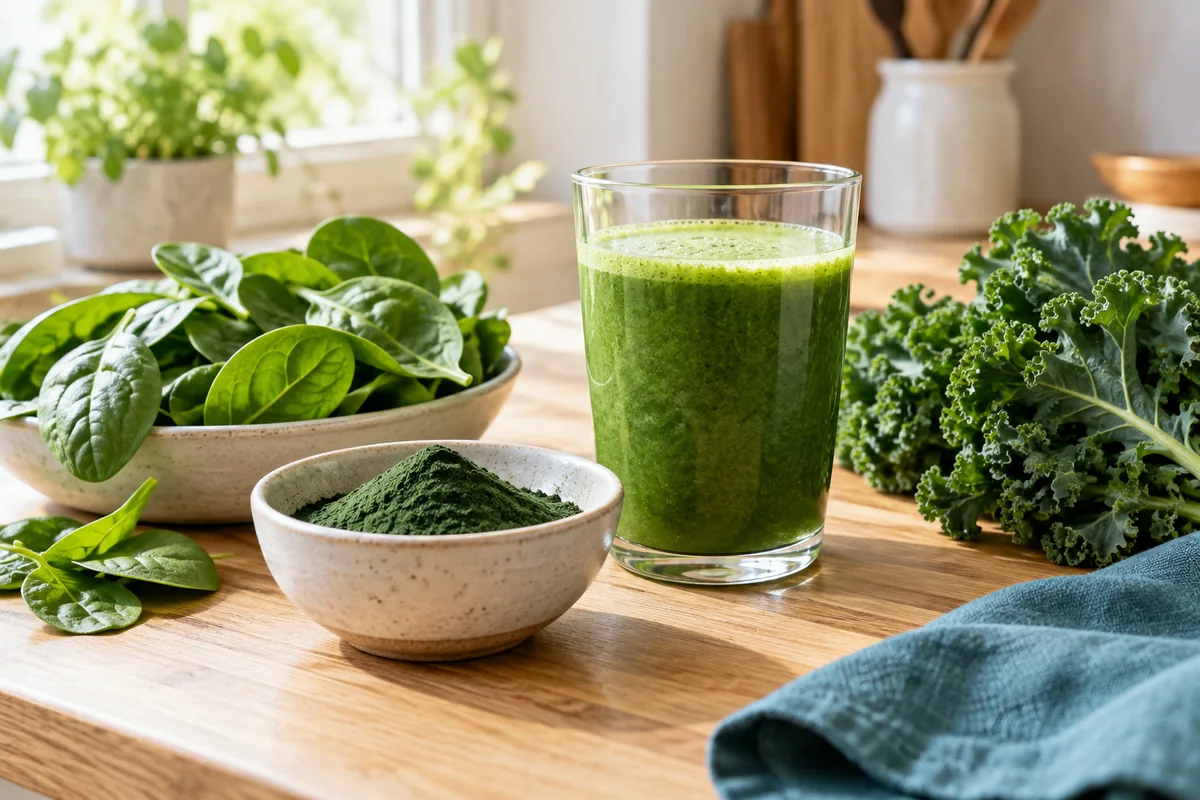
A greens powder may be a convenient way to consume certain listed ingredients, but it is not a verified substitute for vegetables, a complete meal, or a treatment for fatigue. The answer depends on its actual formula. Some contain added vitamins, some contain concentrated plant ingredients, and some combine herbs, enzymes, probiotics, sweeteners, and flavoring. The word greens tells you very little about amounts or suitability.
The supplied link resolves to Amazing Grass Super Greens Powder Original, advertised as 30 servings in an 8.5-ounce container. The retailer title names ingredients including spirulina and beetroot and mentions probiotics and digestive enzymes. This identifies the listing, but does not independently verify its full formula, serving amounts, organic certification, clinical effectiveness, or batch testing. This is category education and a label-evaluation guide, not a review based on personal use or laboratory analysis. Before paying for convenience, identify the job you want the powder to do. A difficult vegetable routine, a diagnosed nutrient deficiency, a lack of time, and unexplained digestive symptoms are different problems with different next steps. A single advertised benefit should not stand in for understanding the product.
The retailer page also displays a California Proposition 65 lead warning. A warning alone does not quantify exposure or establish that a serving is unsafe; it is a reason to request relevant, recent batch testing and understand the result. We have not independently established the exact product’s organic certification scope or contaminant levels.
Separate a mechanism from a meaningful outcome
Plants contain nutrients and other compounds that researchers study, but detecting an antioxidant compound in a scoop is not proof that the finished powder prevents disease. For a meaningful product claim, look for controlled human research using the same formulation, serving, and population. The outcome should matter to readers: daily functioning or clinically relevant events, not merely a persuasive laboratory chart.
A systematic review of fruit and vegetable concentrate research described a limited and heterogeneous evidence base, with uncertainty about cardiovascular implications. It cannot establish that an unrelated current greens mixture produces the same effects. Review of concentrate supplementation and cardiovascular health, 2019.
If a page says clinically studied, ask what was studied. Was the investigation about one ingredient, the complete product, a different version, or only the manufacturing process? Check who funded it and whether the finding was independently repeated. Sponsorship does not automatically invalidate research, but readers should know the context. A short trial showing a change in a biomarker does not settle long-term effectiveness or safety.
Read the label in layers rather than counting ingredients
First identify serving size in grams and scoops. Then inspect listed nutrient amounts and individual ingredient quantities. A long ingredient list can be less informative than a short one if the dose of each component is hidden. A proprietary blend total does not reveal whether a particular ingredient matches a studied amount. FDA explains the distinction between dietary ingredients, other ingredients, and required label information. Read the FDA label explanation.
Second, look for substances you did not intend to add: stimulant-containing extracts, substantial added vitamins, sweeteners, or several overlapping botanicals. Third, compare the full list with your medicines and other supplements. Taking a multivitamin, a fortified protein drink, and a greens mixture can create duplication even when each package looks modest alone.
Do not judge quality by the number of plant names. Fifty ingredients are not necessarily fifty useful doses. Make a small comparison sheet: stated purpose, ingredients with disclosed amounts, measured nutrients, evidence for the finished product, verified quality information, and cost per serving. Blank spaces are information; do not fill them with assumptions.
What vegetables and a meal provide beyond a powder
A varied eating pattern includes fruits, vegetables, pulses, whole grains, and appropriate protein sources. That broader pattern, rather than one concentrated product, is the emphasis of WHO dietary guidance. WHO: healthy diet.
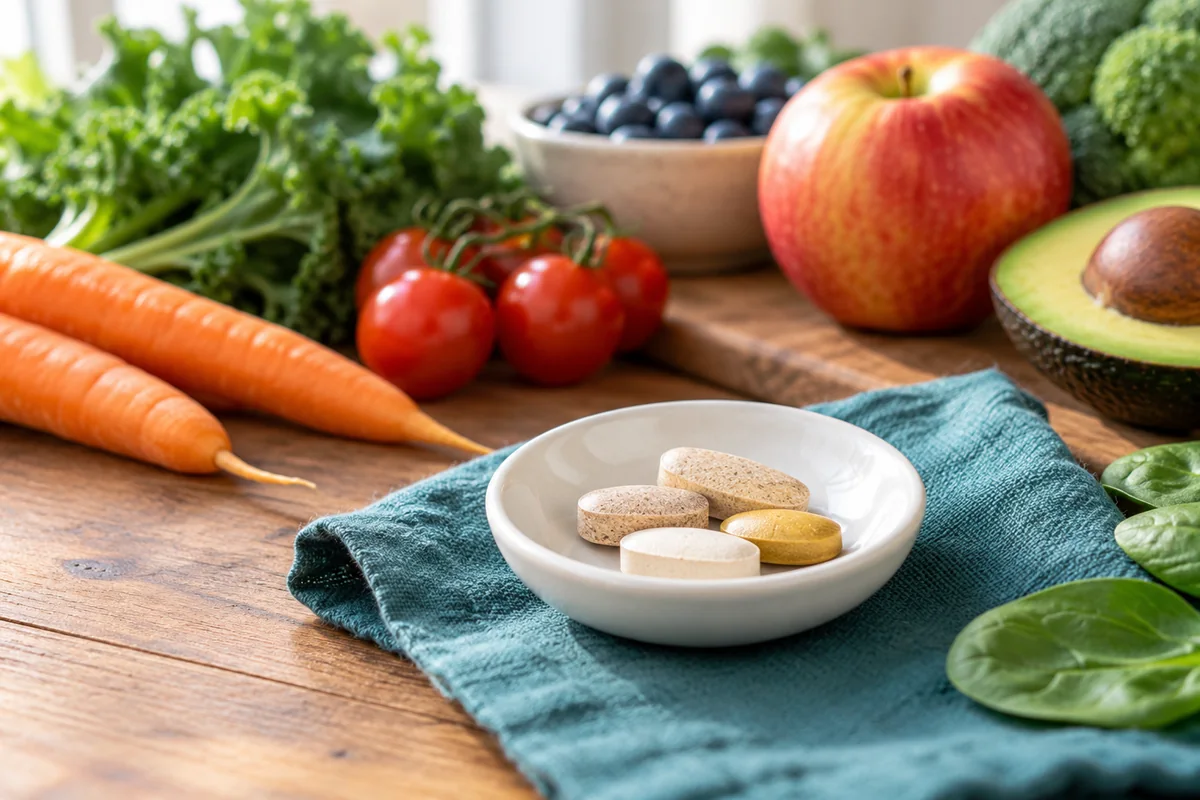
Use a practical comparison rather than a moral judgment about convenience. A meal of beans, rice, and frozen vegetables provides an eating occasion, texture, volume, and a range of nutrients. A small drink may be easy to carry but may not provide comparable energy, protein, or fiber. The correct comparison uses the actual label; do not assume that a green color means a high fiber content.
If cooking is the obstacle, test one simple alternative before buying a monthly powder: add frozen vegetables to a microwave meal, keep fruit you enjoy, or prepare an ordinary side twice a week. These are editorial examples, not clinical protocols. Our fiber guide and balanced-meal article offer ways to simplify the routine without requiring a new diet identity.
Who might value convenience, and who needs another approach
Someone who already understands their nutritional needs may enjoy a transparent, appropriately checked product for taste or portability. That is a preference, not proof that the product is essential. Another person may find an ordinary fortified food or a targeted supplement more economical and easier to evaluate.
If you are avoiding whole foods because of swallowing problems, major digestive symptoms, an eating disorder concern, or unintended weight change, do not let a greens drink become a workaround that delays care. A dietitian or treating clinician can help identify what is actually missing and how to meet the need safely. People with medical nutrition restrictions may need ingredient-specific decisions rather than a general wellness blend.
Ask a concrete question before purchasing: what would I change if the product were unavailable tomorrow? If you have no answer, start by clarifying the need. If the purpose is only to make water more appealing, a food-based flavor option may meet it. If the purpose is correcting a deficiency, a product with uncertain amounts may be a poor tool for the job.
Safe use starts with a complete ingredient and medicine review
Multiple ingredients create multiple questions. Botanical components, added minerals, vitamins, and probiotics should not be treated as interchangeable with ordinary portions of vegetables. NCCIH recommends discussing supplements and possible interactions with health professionals, especially when medicines or health conditions are involved. NCCIH: using supplements wisely.
A person taking warfarin should review vitamin K-containing products with the anticoagulation team rather than making abrupt changes independently. People with kidney disease, transplant-related treatment, immune suppression, pregnancy, or breastfeeding should obtain advice for the exact formula. If a label contains an unfamiliar extract, pause until it can be identified. We cannot supply a safe universal scoop amount for an unverified blend.
If a suitable product is chosen, use only the confirmed label instructions and avoid introducing several supplements at once. Keep the container and lot details in case a problem occurs. Do not mix it into a hot or cold recipe unless its storage and preparation instructions permit that use. New severe symptoms deserve medical attention, not an assumption that the product is detoxifying the body.
The supplied product: label details and open questions
Amazing Grass Super Greens Original, 30 servings, 8.5 oz
Retailer identity and label descriptions were checked October 19, 2026. They are not clinical evidence, proof of an authentic delivered batch, or results from personal product testing. Packaging can change.
| Listing identity | Amazon ASIN B00112ILZM |
|---|---|
| Serving or specification | The supplied listing is Original flavor. Scoop directions and ingredient descriptions vary across the accessible retailer/manufacturer panels; confirm the delivered label. |
| Composition or material | Listed components include cereal grasses, spirulina, chlorella, vegetables/fruit ingredients, flax, pectin, FOS, enzymes and L. acidophilus. Current complete amounts, strain/viability and label-version consistency remain unverified. |
| Testing and certification | Independent certification and current batch-specific laboratory results for this exact supplied item were not confirmed. Manufacturer or retailer testing claims are not treated as independent verification. Organic wording is attributed to the listing; an exact current product-scoped organic certificate was not independently confirmed. |
If the category fits a genuine need, you can inspect the Amazing Grass Super Greens Original, 30 servings, 8.5 oz listing and current label on Amazon (affiliate link). Compare it with the evidence and alternatives above; this is an optional label-comparison link, not a claim that we tested or clinically validated the product.
Quality, cost, and three common questions
Look for evidence that matches the claim: a recognized certification directory entry or an identifiable laboratory report for the product and lot, with a test date and relevant analyses. Organic status, manufacturing standards, ingredient identity, and effectiveness are separate questions. None should be inferred from reviews, a natural label, or a retailer badge.
Does a greens powder detox the body?
There is no basis here to promise that an unverified mixture removes toxins or repairs organs. If a specific exposure or illness is suspected, seek appropriate evaluation rather than purchasing a cleanse.Can it replace a multivitamin?
Only a label comparison can establish what nutrients it supplies, and even that does not establish that either product is needed. Avoid assuming equivalent amounts from similar marketing language.What if I like it and can afford it?
Enjoyment and convenience can have value. Keep expectations proportional, verify suitability, and preserve the foods and routines that support your life. A product does not need a dramatic health promise to be an optional preference.Affiliate reminder: this article includes an Amazon affiliate link. As an Amazon Associate I earn from qualifying purchases. Buying a product is not required to benefit from this guide.
Want to understand your meals in numbers? Explore the macro calculator and meal planner. Tracking is optional and may not suit everyone.
Sources & references
- FDA: Questions and Answers on Dietary Supplements. Source link checked October 19, 2026.
- NCCIH: Using Dietary Supplements Wisely. Source link checked October 19, 2026.
- World Health Organization: Healthy diet. January 26, 2026. Source link checked October 19, 2026.
- Lorenzoni G, Minto C, Vecchio MG et al.: Fruit and Vegetable Concentrate Supplementation and Cardiovascular Health: A Systematic Review from a Public Health Perspective. 2019. Source link checked October 19, 2026.
- Amazon product listing: Amazing Grass Super Greens Original, 30 servings, 8.5 oz (retailer description, not efficacy evidence). Source link checked October 19, 2026.
Research can change. These sources support the claims cited in this article, rather than every suggested example. Our action plans are adaptable editorial examples.

Maya Rivera
A fictional editorial persona for My Wealthy Body’s nutrition coverage, translating sourced guidance into approachable meals and everyday food choices.
Fictional editorial persona · AI generated portrait · No clinical credentials